

Aligners & Braces: A Visual Guide
Orthodontic treatment has come a long way, and in 2026, both traditional braces and clear aligners are incredibly popular choices for achieving a straighter smile. It’s a big decision, one many teens and adults are facing right now. Both methods share the same fundamental goal: to move teeth into their optimal positions for improved function and aesthetics.
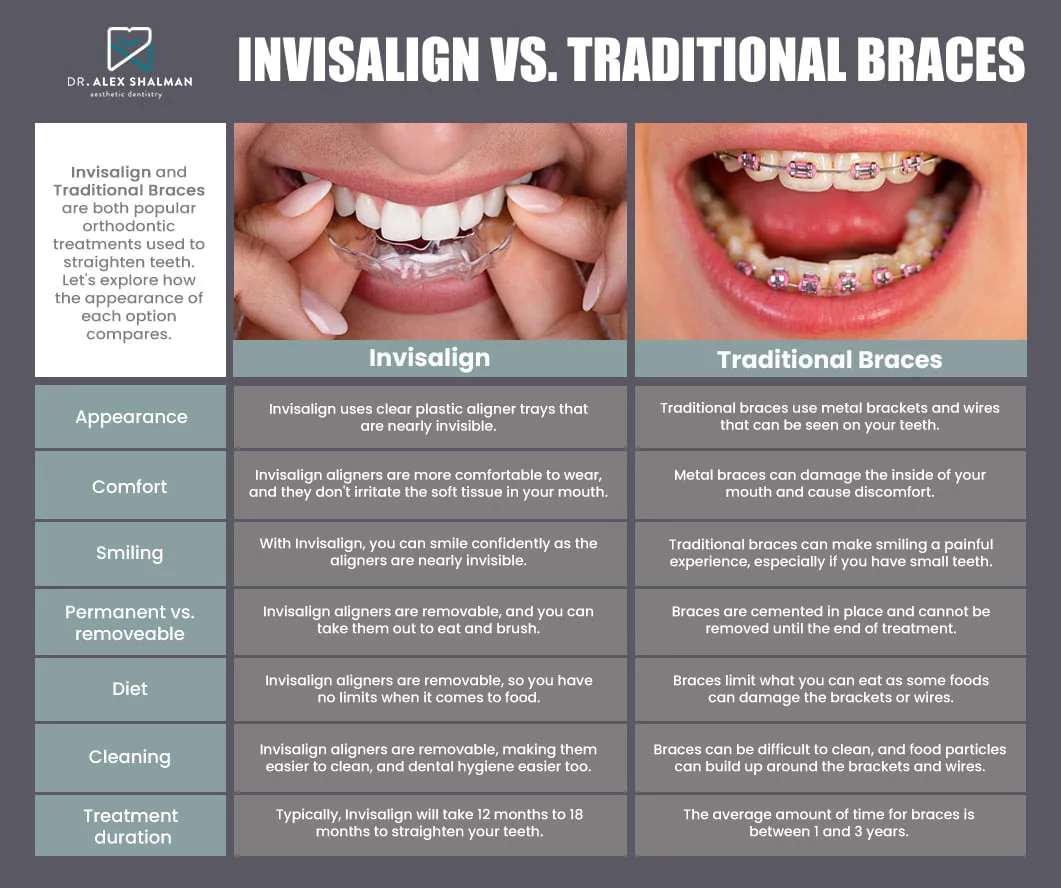
The core promise of both braces and aligners is a healthier, more confident smile. But the path to get there looks quite different. Traditional braces involve metal brackets and wires, a familiar sight to many, while aligners utilize a series of custom-made, nearly invisible plastic trays. Deciding which is 'best' is incredibly personal.
This guide will walk you through a detailed comparison of invisible aligners and traditional braces, covering everything from cost and treatment time to lifestyle impacts and suitability. I think it's important to understand that the ideal choice depends entirely on your specific needs, lifestyle, and preferences. We'll aim to give you the information you need to make an informed decision.
The Mechanics: How They Actually Work
Traditional braces work by applying consistent, gentle pressure to your teeth over time. Small brackets are bonded to each tooth, and a flexible wire is threaded through these brackets. Elastics, or rubber bands, may also be used to connect the brackets and provide additional force, adjusting the bite and aligning the teeth. It's a system of controlled force applied over a prolonged period.
Clear aligners, on the other hand, take a different approach. You're given a series of custom-fitted, clear plastic trays. Each tray is slightly different, designed to incrementally shift your teeth into the desired position. You wear each tray for about one to two weeks, then move on to the next in the series. The aligners gradually reposition teeth without the use of metal brackets and wires.
Both braces and aligners rely on the body’s natural biological process of bone remodeling. When consistent pressure is applied to a tooth, the bone around it responds by either resorbing (breaking down) or depositing (building up) bone tissue. This allows the tooth to slowly move through the jawbone. It’s a fascinating process, and it’s the foundation of successful orthodontic treatment.
The key difference is how that pressure is delivered. Braces offer a more constant, albeit potentially less comfortable, force. Aligners provide a more intermittent force, relying on the consistent exchange of trays to maintain momentum. Both methods are effective, but the experience is quite different.
Cost Breakdown: 2026 Estimates
Let’s talk money. The cost of orthodontic treatment can vary significantly, but in 2026, you can generally expect to pay between $3,000 and $7,000 for traditional braces. This range depends on factors like the complexity of your case, the length of treatment, and your location. Premium self-ligating braces, which are designed to reduce friction, can often be at the higher end of this range.
Invisible aligners typically fall in the $3,500 to $8,000+ price range. Invisalign, a leading brand, tends to be on the higher end, while other options like Byte or Candid may be more affordable. It's important to note that aligner costs often include a series of trays and initial consultations, but may not cover all retainers or potential adjustments.
Beyond the initial treatment cost, consider these additional expenses: initial consultations (often free, but sometimes up to $200), retainers (typically $100 - $300 per arch), and potential adjustments or emergency visits. Insurance coverage can help offset these costs, but the extent of coverage varies widely by plan. Many dental insurance providers offer some level of orthodontic benefit, especially for children and adolescents.
Financing options are widely available for both braces and aligners. Many orthodontists offer in-house payment plans, and third-party financing companies like CareCredit can provide low-interest loans. Hidden costs can include replacement aligners if trays are lost or damaged, and the cost of professional cleanings to maintain good oral hygiene during treatment. Don't be afraid to ask your provider for a detailed breakdown of all potential costs upfront.
Invisible Aligners vs. Traditional Braces: A Cost Comparison
| Item | Traditional Braces | Clear Aligners |
|---|---|---|
| Consultation | Generally a standard fee, often included in overall treatment plan. | Initial consultation fees can vary; some providers offer free consultations. |
| Treatment | Cost varies significantly based on complexity and duration. Typically a longer-term commitment. | Cost is often presented as a package deal, with options for payment plans. Can be more predictable in cost. |
| Retainers | Essential post-treatment; cost for fixed or removable retainers is additional. | Retainer cost usually included in the overall aligner treatment package, but long-term replacement costs apply. |
| Adjustments | Regular adjustment appointments are required throughout treatment; included in initial cost. | No adjustment appointments needed; progress is monitored remotely or at less frequent check-ins. |
| Potential Emergencies | Broken brackets or wires require immediate attention and potential extra costs. | Less prone to emergency situations, but lost or damaged aligners may incur replacement fees. |
| Complexity of Case | Often better suited for complex orthodontic issues. | Best for mild to moderate alignment concerns; severe cases may not be ideal. |
| Treatment Length | Typically a longer treatment duration. | Treatment duration can be shorter in some cases, but depends on adherence. |
Qualitative comparison based on the article research brief. Confirm current product details in the official docs before making implementation choices.
Treatment Timeline: What to Expect
Treatment duration is a major consideration for many people. Traditional braces typically require 18 months to 3 years of wear, although more complex cases can take longer. The exact timeframe depends on the severity of your misalignment, your age, and how consistently you follow your orthodontist's instructions.
Clear aligners generally have a shorter treatment timeline, ranging from 6 months to 2 years. However, complex cases or lack of patient compliance (not wearing the aligners as prescribed) can extend the treatment duration. It's crucial to wear your aligners for at least 20-22 hours per day for optimal results.
Several factors influence treatment length. The severity of your initial misalignment is a big one. More significant crowding or bite issues will naturally take longer to correct. Your age also plays a role – teeth tend to move more readily in younger patients. Patient compliance is arguably the most important factor; consistently wearing your braces or aligners as directed is essential.
Regardless of which option you choose, a retainer phase is crucial for maintaining your results. After your braces are removed or your aligner treatment is complete, you'll need to wear a retainer to prevent your teeth from shifting back to their original positions. Some aligner companies now offer virtual monitoring, allowing your orthodontist to track your progress remotely and adjust your treatment plan as needed.
Lifestyle Impacts: Daily Life with Each
Let's be realistic – both braces and aligners require some adjustments to your daily routine. Traditional braces come with dietary restrictions. You'll need to avoid sticky, hard, and chewy foods that can damage the brackets or wires. This means saying goodbye to things like caramel, gum, and ice. Careful eating and diligent oral hygiene are essential.
Oral hygiene is paramount with both options, but it's particularly important with braces. You'll need to brush and floss carefully around the brackets and wires to prevent plaque buildup and cavities. Aligners offer a bit more convenience in this regard, as they're removable for brushing and flossing. This makes maintaining good oral hygiene a little easier.
Some people experience temporary speech impediments when they first get braces or aligners. This is usually minor and resolves within a few days or weeks. Social anxieties are also common, especially with traditional braces. However, clear aligners offer a more discreet option for those who are self-conscious about their appearance.
Both braces and aligners can impact activities like playing sports or musical instruments. Mouthguards are recommended for contact sports to protect your teeth and braces. Musicians may need to adjust to the feel of braces or aligners in their mouth, but most are able to continue playing without significant difficulty. It takes some getting used to, but most people adapt quickly.
- Dietary Restrictions (braces)
- Oral Hygiene (both)
- Speech Adjustments (initial period)
- Sports/Music Adaptations (both)
Who's a Good Candidate? Suitability Factors
Braces are often the preferred choice for correcting severe malocclusions, such as significant overbites, underbites, or crossbites. They're also well-suited for addressing complex tooth rotations or large gaps. The robust nature of braces allows for more forceful and precise tooth movement.
Clear aligners excel at treating milder to moderate cases of misalignment, such as minor crowding, spacing, or rotated teeth. They're a popular option for adults who want a more discreet treatment option. However, aligners may not be suitable for all cases, especially those requiring significant bite correction.
Both braces and aligners are viable options for teens and adults. However, there are some age-related considerations. Younger patients may respond to treatment more quickly, while adults may require more time and careful planning. It’s important to note that some growth-related issues are best addressed during adolescence.
Ultimately, the best way to determine which treatment is right for you is to schedule a thorough consultation with a qualified orthodontist. They'll assess your individual needs and recommend the most appropriate course of action. In some cases, a combination of both braces and aligners may be used to achieve optimal results.
Top Aligner & Braces Brands in 2026
The market for orthodontic treatment is competitive, with several leading brands in both aligners and braces. Invisalign remains the most well-known aligner brand, offering advanced technology and a wide range of treatment options. They’ve been around for a while and have a solid reputation.
Byte is another popular aligner brand, known for its fast treatment times and affordable price point. Candid offers a streamlined treatment experience with remote monitoring and a focus on convenience. SmileDirectClub, if still operating in 2026, provides direct-to-consumer aligner therapy, but it’s important to be aware of potential limitations compared to traditional orthodontist-supervised treatment.
On the braces side, 3M is a leading manufacturer of orthodontic materials, known for its innovative bracket designs and high-quality wires. Ormco offers a comprehensive range of braces systems, catering to different treatment needs and preferences. American Orthodontics provides a wide selection of braces products, known for their durability and reliability.
Each brand has its own strengths and weaknesses. Invisalign's technology is advanced, but it's also the most expensive. Byte offers speed and affordability, but may not be suitable for complex cases. The best brand for you will depend on your individual needs, budget, and treatment goals. Don't hesitate to ask your orthodontist about their preferred brands and why.
Essential Care Kits for Braces and Aligners

Features 160 bristles per pick for effective cleaning · Designed to clean between teeth and below the gumline · Comes with a convenient travel case for on-the-go use
These dental picks are essential for maintaining oral hygiene and comfort, ensuring a smooth and effective treatment journey, whether you choose traditional braces or invisible aligners.

Helps remove stains for a brighter smile · Contains fluoride for cavity protection · Refreshing cool mint flavor
This teeth whitening toothpaste is essential for maintaining oral hygiene and comfort, ensuring a smooth and effective treatment journey, whether you choose traditional braces or invisible aligners.

Effectively cleans teeth, gums, and braces · Features 10 pressure settings for personalized cleaning · Includes 7 tips for multiple users and needs
This water flosser is essential for maintaining oral hygiene and comfort, ensuring a smooth and effective treatment journey, whether you choose traditional braces or invisible aligners.

Specially designed V-shaped bristles for cleaning around braces · Soft bristles are gentle on gums · Includes an interdental brush for thorough cleaning
This orthodontic toothbrush is essential for maintaining oral hygiene and comfort, ensuring a smooth and effective treatment journey, whether you choose traditional braces or invisible aligners.

Compact and portable design with a built-in mirror · Securely stores aligners, retainers, or mouthguards · Protects orthodontic appliances from damage
These aligner cases are essential for maintaining oral hygiene and comfort, ensuring a smooth and effective treatment journey, whether you choose traditional braces or invisible aligners.
As an Amazon Associate I earn from qualifying purchases. Prices may vary.
Expert Opinions & Emerging Trends
Dr. Thea from Dental House Group in Melbourne emphasizes that the choice between aligners and braces isn't just about aesthetics. 'It’s about finding the treatment that best addresses the specific biomechanical needs of the patient,’ she explains in a recent YouTube video (Aligners vs. Braces: Which Is Best For You? - YouTube). She highlights that braces often provide more control in complex cases.
Orthodontists are increasingly utilizing AI-powered treatment planning software to create more accurate and efficient treatment plans. These tools analyze digital scans of your teeth and predict tooth movement with greater precision. Remote monitoring is also becoming more common, allowing orthodontists to track patient progress remotely and make adjustments to treatment plans as needed.
Personalized aligner materials are another emerging trend. Some companies are developing aligner materials that are specifically tailored to the individual patient's tooth structure and bite. This can improve comfort and treatment effectiveness. There’s also a growing emphasis on "smile design," integrating orthodontic treatment with cosmetic dentistry to achieve aesthetically pleasing results.
The field of orthodontics is constantly evolving. New technologies and materials are being developed all the time, offering patients more options and improved outcomes. While traditional braces and aligners remain the cornerstone of orthodontic treatment, the future promises even more innovative and personalized approaches to achieving a healthy, beautiful smile.

No comments yet. Be the first to share your thoughts!