

Aligners & Braces: The 2026 Landscape
Orthodontic treatment today offers more choices than in the past. Traditional metal braces are still a reliable option, but invisible aligners have become very popular as a more discreet alternative. Both aim for a straighter, healthier smile but differ in how they work, their cost, and who they suit best. Knowing these differences helps you choose wisely.
More people are seeking orthodontic treatment, wanting better smiles and understanding the health benefits. Forbes Health and CNET offer good overviews of the market, noting current trends. The choice isn't just about looks; it's about finding what works best for you and your life.
Convenience and patient comfort are becoming more important. Aligners, being removable and flexible, fit this trend well. Still, traditional braces work well, especially for complex orthodontic problems. This comparison will help you sort through the options and decide what's best.
Traditional Braces: Still a Strong Contender?
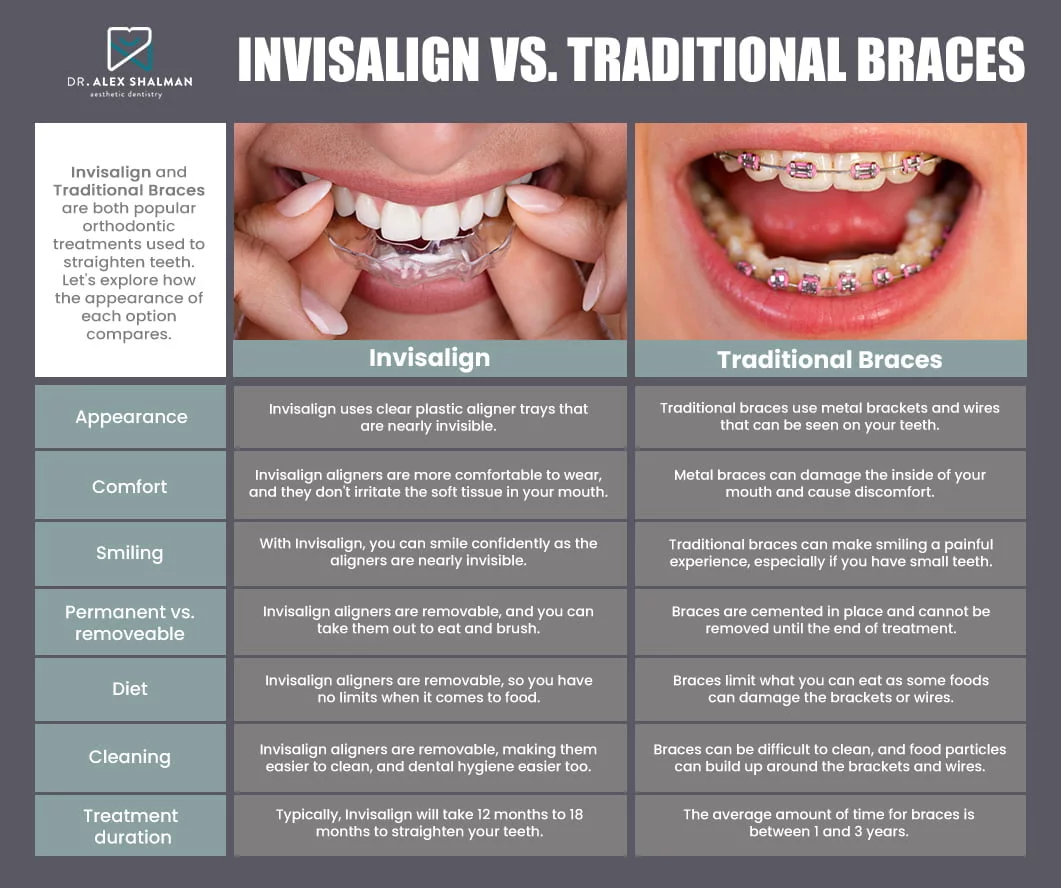
Traditional braces have been a go-to for orthodontic treatment for years, and for good reason. They're very effective, especially for complex dental problems. Brackets are attached to each tooth and connected with a wire. This wire applies steady pressure, slowly moving teeth into place. Rubber bands are often used to fix bite issues.
Several types of braces are available. Metal braces are most common and usually cheapest. Ceramic braces look more discreet because the brackets match tooth color, but they can break more easily. Self-ligating braces use a built-in clip to hold the wire, which might reduce friction and treatment time, though studies are mixed. The best type depends on your needs and budget.
A major advantage of traditional braces is their ability to fix many orthodontic problems. They work well for severe crowding, overbites, underbites, and crossbites. They're also durable and less likely to get damaged than aligners. However, braces have downsides. They need regular orthodontist adjustments, and the metal brackets can be uncomfortable or irritating.
Dietary restrictions are a significant consideration with braces. Patients typically need to avoid hard, sticky, and chewy foods to prevent damage to the brackets and wires. Maintaining good oral hygiene also requires extra effort, as food particles can easily become trapped around the braces. Finally, the visible nature of traditional braces can be a concern for some patients, although colorful elastics can offer a degree of personalization.
Invisible Aligners: The Rise of Convenience
Invisible aligners, like Invisalign, have revolutionized the orthodontic landscape. These clear, removable plastic trays gradually shift teeth into alignment. The process begins with a consultation and a digital scan or impression of your teeth. This information is used to create a customized treatment plan, outlining the precise movements needed to achieve your desired smile.
A series of aligners are then fabricated, each designed to move your teeth a small step closer to the final position. You wear each aligner for about one to two weeks before switching to the next in the series. The aligners are virtually invisible, making them a popular choice for adults and teens who are conscious about their appearance. The removability is another major benefit, allowing you to eat, brush, and floss normally.
The Invisalign Accessory Store offers a range of products to help maintain and care for your aligners. These include cleaning crystals, aligner cases, and tools for removing and inserting the aligners. While aligners are generally more comfortable than braces, some patients may experience temporary discomfort when switching to a new aligner.
However, invisible aligners aren't without their limitations. They tend to be more expensive than traditional braces, and the treatment time can sometimes be longer. They are also not suitable for all cases, particularly those involving severe malocclusions or significant bite issues. Furthermore, aligners require a high degree of patient compliance – they need to be worn for 20-22 hours a day to be effective. Loss or damage to an aligner can also disrupt the treatment process and incur additional costs.
Treatment Complexity & Suitability
The complexity of your orthodontic needs is a primary factor in determining whether braces or aligners are the better choice. Traditional braces excel at treating complex malocclusions, such as severe overbites, underbites, and crossbites. They can also effectively address significant crowding and rotational issues. The fixed nature of braces provides the necessary force and control for these more challenging cases.
Invisible aligners, on the other hand, are generally best suited for mild to moderate alignment issues. They are particularly effective for closing small gaps, correcting minor crowding, and addressing slight rotations. While advancements in aligner technology have expanded their capabilities, they still struggle with complex bite corrections and significant tooth movement. The success of aligner treatment relies heavily on patient compliance and the ability of the aligners to effectively grip the teeth.
Age is another consideration. While both braces and aligners can be used for patients of all ages, braces are more commonly used for teenagers, whose jaws are still developing. Aligners are often preferred by adults, who may be more concerned about aesthetics and convenience. However, this is not a hard and fast rule, and many adults opt for braces, while teenagers are increasingly choosing aligners.
- Braces are generally better for: Severe overbites, underbites, and crossbites
- Braces are generally better for: Significant crowding and rotational issues
- Aligners are generally better for: Mild to moderate alignment issues
- Aligners are generally better for: Closing small gaps and correcting minor crowding
Treatment Complexity: Braces vs. Aligners (Projected 2026)
| Orthodontic Issue | Braces | Aligners | Notes |
|---|---|---|---|
| Mild Crowding | Excellent | Excellent | Both braces and aligners are highly effective for minor alignment issues. Aligners are often preferred for their aesthetics in these cases. |
| Moderate Crowding | Excellent | Good | Braces generally maintain a slight advantage with moderate crowding due to their ability to apply more complex forces. Aligners are still a viable option, but may require attachments and longer treatment times. |
| Severe Crowding | Good | Fair | Severe crowding often benefits from the robust force control offered by traditional braces. Aligners may be possible with advanced techniques, but success is less predictable. |
| Overbite | Excellent | Good | Braces are historically favored for correcting significant overbites, but aligner technology is improving, particularly with the use of attachments and elastics. |
| Underbite | Fair | Fair | Correcting underbites is challenging with either method. Braces often require more extensive mechanics, while aligners may be limited in their ability to deliver sufficient force. |
| Crossbite | Good | Fair | Braces can effectively expand the palate and correct crossbites. Aligners can address some crossbites, but complex cases often require braces. |
| Gaps | Excellent | Excellent | Both braces and aligners are effective at closing spaces. Aligners offer a discreet option for gap closure. |
Illustrative comparison based on the article research brief. Verify current pricing, limits, and product details in the official docs before relying on it.
Cost Breakdown: Aligners vs. Braces (2026)
The cost of orthodontic treatment can vary significantly depending on the complexity of the case, the type of treatment chosen, and the location. In 2026, traditional braces typically range from $3,000 to $7,000, while invisible aligners, such as Invisalign, generally cost between $4,000 and $8,000. These are broad estimates, and costs can easily exceed these ranges for more complex cases.
The cost of braces includes the initial consultation, the braces themselves (brackets, wires, and elastics), regular adjustments, and retainers. Potential hidden costs include broken brackets, emergency visits, and the cost of replacing lost or damaged components. For aligners, the cost covers the consultation, the series of aligners, and retainers. Additional costs may arise from lost or damaged aligners, or the need for additional aligners if treatment takes longer than anticipated.
Insurance coverage for orthodontic treatment varies widely. Some insurance plans cover a portion of the cost, while others offer no coverage at all. It’s crucial to check with your insurance provider to determine your specific benefits. Many orthodontists also offer financing options, such as payment plans, to make treatment more affordable.
- Traditional Braces: $3,000 - $7,000
- Invisible Aligners (Invisalign): $4,000 - $8,000
- Potential Hidden Costs (Braces): Broken brackets, emergency visits
- Potential Hidden Costs (Aligners): Lost/damaged aligners, additional aligners
Essential Care Products for Your Braces Journey

Designed for effective cleaning between teeth and along the gumline. · Features a flexible neck for easy reach. · Includes a convenient carry case for on-the-go use.
These disposable interdental brushes are recommended by dentists for their effectiveness in cleaning hard-to-reach areas, crucial for maintaining oral hygiene with braces or aligners.

Specifically designed to fit under arch wires of braces. · Helps encourage consistent flossing habits. · Gentle and non-damaging to dental work.
Platypus Orthodontic Flossers are essential for cleaning around braces, making it easier to navigate under the arch wire and maintain gum health.

Expands and stretches to clean effectively between teeth. · PTFE & PFAS free and gentle on gums. · Cardamom flavor for a refreshing clean.
This natural dental floss expands to provide a thorough clean between teeth, offering a comfortable and effective flossing experience suitable for all orthodontic patients.

Designed for cleaning between tight teeth. · Safe for use with braces and other dental work. · Features a flexible neck for improved maneuverability.
DenTek Slim Brush interdental brushes are ideal for cleaning tight spaces and around orthodontic appliances, ensuring thorough plaque removal.

Features 5 unique brushing modes for personalized cleaning. · Pressure sensor alerts to prevent brushing too hard. · Comes in a convenient 2-pack for multiple users or extended use.
The Oral-B iO 5 electric toothbrush offers advanced cleaning technology with multiple modes and a pressure sensor, providing a superior clean essential for maintaining oral health with any orthodontic treatment.
As an Amazon Associate I earn from qualifying purchases. Prices may vary.
Maintenance & Lifestyle Impact
Maintaining good oral hygiene is essential with both braces and aligners, but the methods differ. With braces, brushing and flossing require extra care to clean around the brackets and wires. Interdental brushes and floss threaders are helpful tools for reaching difficult areas. Dietary restrictions are also significant; patients need to avoid hard, sticky, and chewy foods that can damage the braces.
Aligners require a different approach. They are removed for eating, brushing, and flossing, making oral hygiene easier. However, aligners need to be cleaned regularly with a mild soap or aligner cleaning solution to prevent staining and bacterial growth. It’s also crucial to wear aligners for the prescribed 20-22 hours a day for optimal results.
The lifestyle impact of braces and aligners also differs. Braces can make it difficult to play certain sports or musical instruments. Aligners offer more flexibility, as they can be removed for these activities. However, it's important to store aligners securely when they are not in use to prevent loss or damage. Both treatments require regular check-ups with an orthodontist to monitor progress and make adjustments.
Expert Opinions & Emerging Trends
Orthodontists are generally optimistic about the future of both braces and aligner technology. According to Forbes Health, advancements in materials and techniques are constantly improving the effectiveness and comfort of both treatments. There's a growing trend towards personalized treatment plans, utilizing 3D imaging and computer-aided design to create customized braces and aligners.
CNET highlights the increasing demand for aesthetic orthodontic solutions, driving innovation in aligner technology. Some emerging trends include the use of artificial intelligence to predict tooth movement and optimize treatment plans, as well as the development of new materials that are more durable and less visible. Self-ligating braces are also continuing to evolve, with manufacturers claiming improved efficiency and reduced treatment times.
The consensus among experts is that the best treatment option depends on the individual patient’s needs and preferences. Both braces and aligners have their strengths and weaknesses, and a thorough consultation with a qualified orthodontist is essential to determine the most appropriate course of action.
Aligner & Brace Brands: A Quick Comparison
The aligner market is dominated by Invisalign, the pioneer in clear aligner technology. They offer a comprehensive treatment system and a wide network of experienced orthodontists. Byte is another popular option, focusing on direct-to-consumer aligner treatment, but often involving less orthodontist supervision. SmileDirectClub, while facing challenges, remains a player in the market, offering both in-person and remote treatment options.
On the traditional braces side, several manufacturers offer high-quality products. OrthoBrace is a well-respected brand known for its durable and reliable braces. American Orthodontics provides a wide range of braces options, including metal, ceramic, and self-ligating braces. GAC International is another leading manufacturer, offering innovative braces systems and accessories.
Price points vary significantly between brands. Invisalign is generally the most expensive aligner option, while Byte and SmileDirectClub tend to be more affordable. Traditional braces prices vary depending on the type of braces and the orthodontist’s fees. This quick comparison is a starting point for your research; it’s important to consult with an orthodontist to discuss your specific needs and find the best brand for you.
- Invisalign: Comprehensive treatment, wide network of orthodontists, generally most expensive
- Byte: Direct-to-consumer, potentially more affordable
- SmileDirectClub: In-person & remote options
- OrthoBrace: Durable and reliable traditional braces
- American Orthodontics: Wide range of brace options
- GAC International: Innovative braces systems

No comments yet. Be the first to share your thoughts!