

The AI-Powered Orthodontic Shift
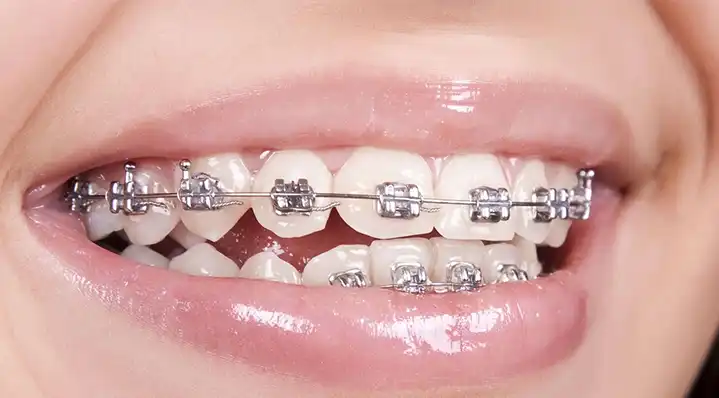
Orthodontics is entering a new era, driven by the rapid advancements in artificial intelligence. For decades, braces meant a series of adjustments, often relying heavily on the orthodontist’s experience and two-dimensional X-rays. Traditional braces, while effective, are fairly static once applied – adjustments are manual and based on periodic check-ups. Now, we’re seeing a shift towards dynamic, data-driven treatment, and it's happening faster than many realize.
This isn’t about robots replacing orthodontists. Instead, AI is becoming a powerful tool assisting them in diagnosis, treatment planning, and monitoring. It’s about leveraging the power of algorithms to analyze vast amounts of data and personalize care in ways that weren’t previously possible. Think of it as a super-powered assistant, helping your orthodontist deliver the best possible outcome.
The changes happening now aren't just theoretical. We're seeing the beginnings of AI integration in everyday orthodontic practice. Companies are developing software that uses machine learning to predict tooth movement, and the first self-adjusting braces are already in development. This isn’t a distant future; it’s the trajectory of modern braces care, and 2026 will likely bring even more significant AI integration.
Gentle Dentistry SI notes that 2026 will see a boom in orthodontic technologies, and Gire Orthodontics points to the growing role of technology in shaping the landscape of orthodontic treatment. The application of AI is no longer a question of if, but how quickly it will become standard practice. This is a genuinely exciting time for both orthodontists and patients.
Predictive Alignment: AI’s Role in Treatment Planning
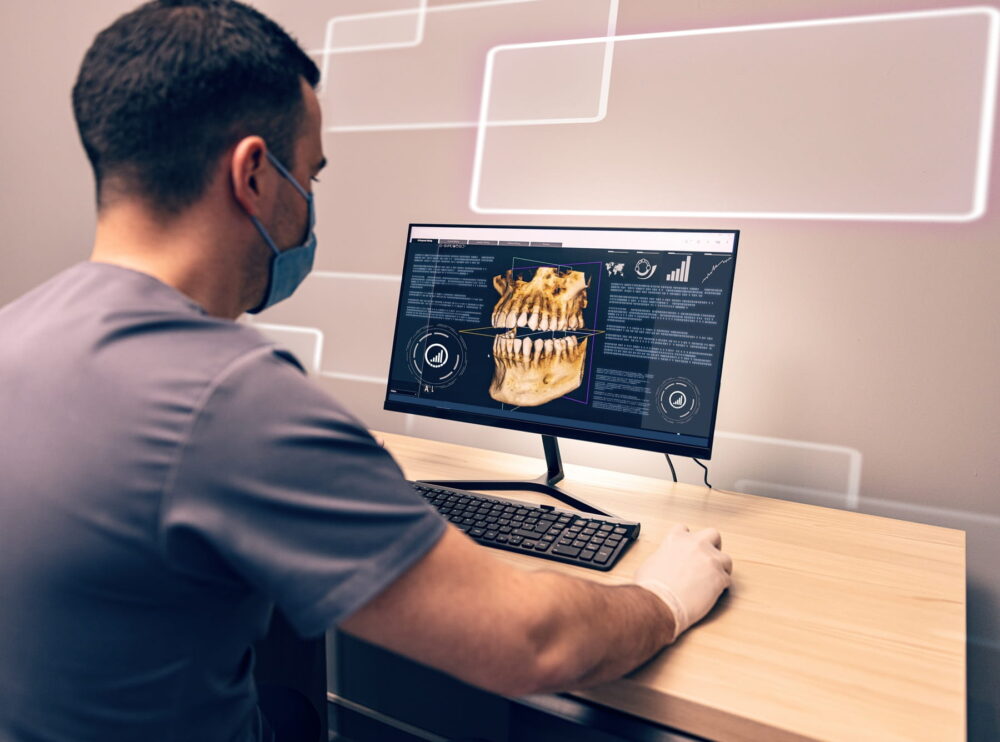
One of the most significant ways AI is revolutionizing orthodontics is through predictive alignment. Traditionally, orthodontists would create a treatment plan based on X-rays, impressions, and their clinical judgment. Now, AI algorithms can analyze 3D scans of a patient’s teeth and jaw, along with other data points, to predict how those teeth will move over the course of treatment. This is a massive leap forward in accuracy.
These algorithms aren’t just guessing. They’re trained on massive datasets of past orthodontic cases, allowing them to identify patterns and predict outcomes with increasing precision. They can highlight potential problem areas – teeth that are likely to resist movement, or areas where root resorption might be a concern – before treatment even begins. This proactive approach allows orthodontists to adjust the treatment plan accordingly, minimizing potential complications.
The use of machine learning is central to this process. The AI learns from each case, constantly refining its predictions and improving its accuracy. This leads to more personalized treatment plans, tailored to the unique anatomy and biology of each patient. Derek Damon Orthodontics emphasizes adherence to AAO guidelines, and AI-driven planning can significantly contribute to meeting these standards.
For patients, this means potentially shorter treatment times, less discomfort, and more predictable results. Imagine knowing, with a high degree of confidence, how long your braces will be on and what the final outcome will look like. That level of predictability is becoming increasingly attainable thanks to AI. It also means fewer emergency visits and a smoother overall experience.
Self-Adjusting Braces: Beyond the Wire
The idea of "smart’ braces – braces that can automatically adjust themselves – has been a topic of research for years, and we’re starting to see real progress. These aren’t your grandmother"s braces. Instead of relying on manual adjustments by the orthodontist, these braces use technology like micro-robotics or shape-memory alloys to apply precise forces to the teeth.
Shape-memory alloys, for example, can be programmed to change shape in response to specific stimuli, like temperature or electrical current. This allows the braces to gently and continuously adjust the pressure on the teeth, optimizing tooth movement. Micro-robotics takes this concept a step further, using tiny robots embedded within the braces to make precise adjustments.
It’s important to be realistic. This technology is still largely in the development phase. While several companies are working on self-adjusting braces, they aren’t yet widely available. However, the potential benefits are enormous. Reduced need for frequent orthodontic appointments is a major draw. It’s convenience, but also a reduction in the disruption to daily life.
Currently, the biggest hurdles are miniaturization, cost, and biocompatibility. Making these technologies small enough to fit comfortably in the mouth, affordable for patients, and safe for long-term use are significant challenges. But the research continues, and the progress is promising. The goal is a braces experience that is more efficient, less intrusive, and ultimately, more comfortable.
Remote Monitoring & AI-Driven Check-ins
One of the most immediate benefits of AI in orthodontics is the ability to remotely monitor a patient’s progress. Traditionally, orthodontic check-ups require a visit to the orthodontist’s office. Now, with the help of AI-powered apps and wearable sensors, much of this monitoring can be done from the comfort of your own home.
These apps often use the phone’s camera to scan the teeth, allowing the AI to track tooth movement and identify potential problems. Wearable sensors, attached to the braces, can provide even more detailed data on the forces being applied to the teeth. This data is then analyzed by AI algorithms, which can alert the orthodontist to any issues – a broken bracket, a tooth that isn’t moving as expected, or signs of inflammation.
This proactive approach allows for earlier intervention, preventing small problems from becoming bigger ones. It also significantly reduces the frequency of in-office visits. Instead of monthly check-ups, you might only need to visit the orthodontist every few months, or even less frequently. This saves time and money for both the patient and the orthodontist.
The cost implications are still evolving. While the technology itself may add to the upfront cost of treatment, the reduced number of office visits could offset those costs over time. Many practices are offering subscription-based models that bundle the cost of the technology with the overall treatment plan. It’s a changing landscape, and it’s important to discuss the costs and benefits with your orthodontist.
AI and Early Intervention: Spotting Issues Sooner
AI isn’t just transforming treatment for patients already wearing braces; it’s also playing a role in preventative orthodontics. By analyzing data from dental records, X-rays, and even facial photos, AI can identify potential orthodontic issues early in a child’s development. This allows for early intervention treatments, potentially preventing more serious problems down the road.
For example, AI can identify children who are at risk of developing malocclusion (misalignment of the teeth) or jaw growth problems. This allows orthodontists to recommend early interventions, such as expanders or retainers, to guide the growth of the jaw and teeth. These interventions are often less invasive and more effective when performed at a younger age.
This isn't simply about straightening teeth. It's about overall facial development and ensuring proper bite function. A properly aligned bite can improve chewing, speech, and even sleep quality. AI can help orthodontists create a comprehensive treatment plan that addresses not just the teeth, but the entire facial structure.
The ability to identify potential problems early can have a significant impact on long-term oral health. By addressing these issues proactively, orthodontists can help children avoid more extensive and costly treatments later in life. It’s a shift from reactive to proactive care, and AI is making it possible.
AI-Detected Orthodontic Issues
- Crowding - AI algorithms can analyze scans to identify areas where teeth are overlapping or lack sufficient space, even in early stages.
- Open Bite - AI can detect a vertical gap between the upper and lower front teeth, a condition known as an open bite, by analyzing the angle and position of incisors.
- Crossbite - AI assists in identifying crossbites, where some upper teeth bite inside the lower teeth, by analyzing panoramic radiographs and 3D scans.
- Deep Bite - AI can measure the vertical overlap of upper and lower incisors to detect deep bites, where the upper teeth excessively cover the lower teeth.
- Impacted Teeth - AI algorithms can analyze dental x-rays to identify teeth that are blocked from erupting properly, potentially predicting future impaction issues.
- Jaw Misalignment - AI-powered software can analyze cephalometric tracings and 3D facial scans to identify subtle jaw discrepancies and asymmetries.
- Early Caries Detection - While primarily for general dentistry, AI integrated into intraoral scanners can assist in identifying early signs of tooth decay around brackets, aiding in preventative care during orthodontic treatment.
The Data Privacy Question
With the increasing use of AI in orthodontics comes a legitimate concern about data privacy and security. These technologies rely on the collection and analysis of sensitive patient data – including X-rays, scans, photos, and even genetic information. It’s crucial to understand how this data is being used and what measures are being taken to protect it.
Most orthodontic practices and technology companies are committed to protecting patient privacy. They typically employ robust security measures, such as encryption and access controls, to prevent unauthorized access to data. They also adhere to strict privacy regulations, such as HIPAA (Health Insurance Portability and Accountability Act) in the United States.
However, it’s important to be aware of the risks. Data breaches can happen, and patient data could be compromised. It’s also important to understand how your data is being used – is it being shared with third parties? Is it being used for research purposes? Transparency is key. Ask your orthodontist about their data privacy policies and procedures.
Ultimately, the responsible use of AI in orthodontics requires a commitment to data privacy and security. Patients need to be informed about how their data is being used, and they need to have control over their data. It’s a complex issue, but one that must be addressed to ensure that these technologies are used ethically and responsibly.
Data Security Measures in AI-Powered Orthodontic Platforms (Projected 2026)
| Platform Type | Data Encryption | HIPAA Compliance | Data Anonymization | Access Controls | Third-Party Audits |
|---|---|---|---|---|---|
| In-House AI Software (Dental Practices) | Medium | Medium | Low | Medium | Low |
| Integrated Practice Management Systems with AI Modules | Medium | High | Medium | High | Medium |
| Dedicated AI Orthodontic Platforms (Cloud-Based) | High | High | High | High | High |
| AI-Powered Diagnostic Tools (Image Analysis) | Medium | Medium | Medium | Medium | Medium |
| Remote Monitoring Platforms with AI Analysis | Medium | Medium | Medium | Medium | Low |
| AI-Driven Treatment Planning Software | High | High | Medium | High | Medium |
| Platforms Utilizing Machine Learning for Bracket Placement | Medium | Medium | Low | Medium | Low |
Illustrative comparison based on the article research brief. Verify current pricing, limits, and product details in the official docs before relying on it.
What Does 2026 Hold? Emerging Trends
Looking ahead to 2026 and beyond, the future of AI orthodontics is brimming with potential. We can expect to see even more sophisticated AI algorithms that can predict treatment outcomes with greater accuracy. This will lead to more personalized treatment plans and even more efficient care.
One promising area of research is the development of fully autonomous braces – braces that can adjust themselves without any human intervention. While this is still a long way off, the progress being made in micro-robotics and shape-memory alloys suggests that it may be possible in the future. Imagine braces that continuously optimize tooth movement, adapting to your individual needs in real-time.
Another trend is the integration of AI with other technologies, such as virtual reality (VR) and augmented reality (AR). VR could be used to create immersive simulations of treatment progress, allowing patients to visualize the expected outcome. AR could be used to overlay digital information onto the patient’s mouth, guiding the orthodontist during adjustments.
The potential for personalized medicine in orthodontics is also huge. By combining AI with genetic information and other biomarkers, orthodontists may be able to predict a patient’s response to treatment with even greater accuracy. This will allow for truly customized treatment plans, tailored to the unique biology of each individual. This is a very dynamic field, and the next few years will undoubtedly bring even more exciting innovations. The focus will remain on making orthodontic treatment more efficient, more comfortable, and more accessible.
How comfortable are you with the idea of AI playing a larger role in your orthodontic treatment?
AI-powered orthodontics is shaping the future of braces care. From treatment planning to real-time adjustments, artificial intelligence is becoming more involved in your braces journey. We want to hear from you -- how do you feel about this shift? Vote below!

No comments yet. Be the first to share your thoughts!